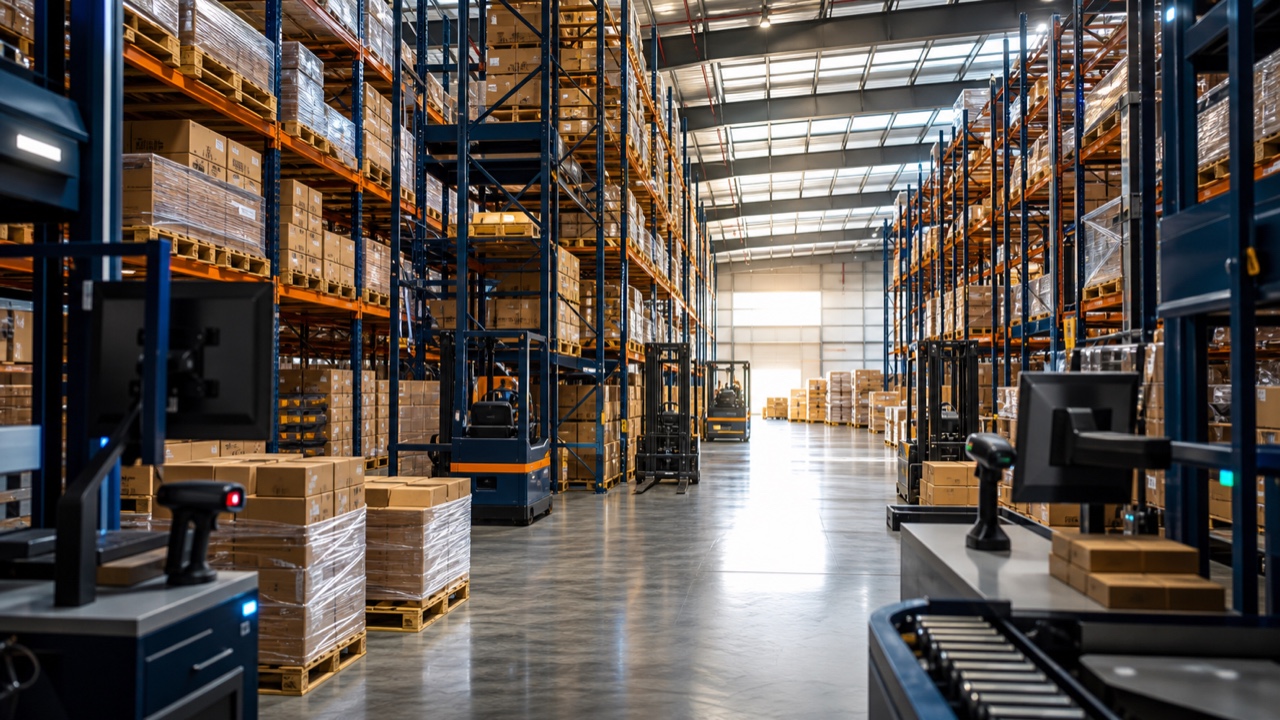
If you are searching for a 3PL Sydney provider, you are probably not just looking for empty warehouse space. You may need a warehouse that can receive imported stock, unload pallets or cartons, count inventory, store it properly, pick and pack orders, manage returns, and connect the final mile to metro Sydney, regional NSW, the ACT or interstate customers.
If your search is more specific, such as 3PL warehousing Sydney, 3PL warehouse Sydney or 3PL logistics Sydney, use the same test: can the provider receive the freight you actually import, control inventory in a way your team can see, and dispatch orders without creating a new transport problem?
That is why a Sydney 3PL decision should start with the operating flow, not the square metre rate. A good 3PL warehouse sits between freight forwarding, customs clearance, warehouse and 3PL services, road freight, and the customer delivery promise.
ASCM explains 3PL logistics as third-party support for product delivery services, including warehousing, inventory management, product selection and packing, cross docking, transportation, shipping, receiving and returns. In practical terms, a 3PL warehouse is only useful if those services match your inbound freight, SKU profile, order rhythm and compliance needs.
This guide is for importers, wholesalers and growing ecommerce operators comparing a 3PL warehouse in Sydney against self-storage, leased warehousing or a general freight provider. If you need a broader national comparison, read Warehousing and Distribution Australia. If you are unsure whether you need a forwarder, courier or 3PL, start with Freight Forwarder vs Courier vs 3PL.
Quick answer: when 3PL Sydney makes sense
A Sydney 3PL makes sense when your stock movement has become more complex than simple storage.
Typical triggers include:
- You import stock through Port Botany or Sydney Airport and need a clean warehouse receiving process.
- You sell by carton, unit, kit or order after importing by pallet, container or LCL shipment.
- Your team spends too much time unloading, counting, picking, packing or reconciling inventory.
- You need storage plus dispatch, not storage alone.
- You need B2B delivery booking, retail DC labels, proof of delivery, courier dispatch or pallet transport.
- You need returns, quarantine areas, discrepancy reporting or damaged-carton handling.
- Your current space cannot receive containers, tailgate vehicles or pallet deliveries safely.
Self-storage may still work for low-volume stock. A leased warehouse may work if you want full control and can manage labour, equipment, WMS, racking, safety and transport. A 3PL works best when the provider’s process can absorb the daily warehouse workload without hiding costs or weakening stock visibility.
First shortlist check for 3PL warehouse Sydney providers
Before you compare rate cards, ask each provider to answer the same six questions.
| Question | Why it affects cost and service |
|---|---|
| Can you receive our actual inbound freight? | Containers, LCL cargo, loose cartons, pallets and courier deliveries create different receiving work. |
| How will stock become visible after receiving? | A 3PL warehouse without useful WMS visibility can create stock disputes even when the pallet count is correct. |
| What is included in pallet storage cost? | The cheapest storage line can be misleading if receiving, putaway, pick-pack, returns or exit fees are high. |
| Which order types are strongest for you? | Ecommerce parcels, B2B cartons, pallet dispatch and retail DC orders need different labour and carrier processes. |
| What cargo do you refuse or quarantine? | Food, batteries, timber packaging, high-value goods, damaged cartons and regulated products may need extra controls. |
| Who owns delivery exceptions? | Late pickups, failed deliveries, missed bookings and POD issues need a named process, not a generic support inbox. |
This first pass keeps the comparison practical. It also stops a broad “warehousing Sydney” search from turning into a storage-only decision when the business actually needs receiving, fulfilment and transport control.
Why Sydney location matters
Sydney is not just a customer market. It is a freight handoff point.
NSW Ports identifies Port Botany as New South Wales’ primary container port, handling almost all NSW container volume. NSW Ports also notes that most import containers travel within 40 kilometres of Port Botany, with rail links to metropolitan intermodal terminals. That matters because a warehouse location can affect container delivery windows, unpack timing, pallet transport, courier cutoffs and the risk of double handling.
For a Prestons-based importer or distributor, south-west Sydney can be practical because it sits near the M5 and M7 freight corridors, industrial estates, intermodal activity and metro delivery routes. But location is not enough. A warehouse near the right corridor still needs the right receiving rules, labour, safety controls and systems.
Use location as a filter, not the full decision. A slightly farther 3PL with better receiving discipline, inventory visibility and outbound transport can beat a closer warehouse with weak process.
3PL warehouse vs warehouse storage
Many businesses use “warehouse storage Sydney” and “3PL Sydney” as if they mean the same thing. They overlap, but they are not identical.
Warehouse storage usually means space to hold goods. Depending on the provider, it may include pallet storage, bulk storage, short-term overflow space, container unpack, carton handling, or access by appointment. It may not include order fulfilment, WMS visibility, integrations or returns.
A 3PL warehouse should add operating services around the stock:
- Inbound receiving from containers, LCL shipping, pallets, cartons or couriers.
- Count, condition check and discrepancy reporting.
- Putaway to pallet, bin, shelf or SKU locations.
- Inventory records, cycle counts and stock visibility.
- Pick and pack for ecommerce, wholesale or B2B orders.
- Relabelling, kitting, bundling or light value-added work where agreed.
- Returns inspection and restocking.
- Courier, local delivery, linehaul or palletised freight Australia coordination.
DHL’s 3PL guide frames 3PL around outsourced warehousing, order flow and fulfilment support. MYOB’s 3PL explanation makes the same practical distinction: a 3PL is not only storage; it can handle warehousing, fulfilling orders and shipping.
For imported stock, the boundary is important. Ordinary 3PL stock should usually be released and ready for normal warehouse activity. Goods still under customs or biosecurity control need a separate pathway.
3PL warehousing Sydney vs ordinary warehouse space
Searches such as “3PL warehousing Sydney”, “3PL logistics Sydney”, “3PL warehouse Sydney”, “warehousing Sydney” and “warehouse Sydney” can point to different needs. Some importers only need short-term pallet storage. Others need a 3PL logistics workflow that connects inbound freight, customs release, stock receiving, pick-pack, returns and road freight dispatch.
For import cargo, the difference shows up before the first pallet arrives. A 3PL warehouse in Sydney should know what is coming from the freight forwarder Sydney path, whether a customs broker Australia file is complete, whether BICON Australia conditions affect receiving, and how the import duty and GST Australia estimate treats warehouse, storage and delivery costs.
If a provider sells only space, compare it as warehouse storage. If the provider receives stock, controls inventory, fulfils orders and coordinates transport exceptions, compare it as 3PL logistics.
The inbound handoff is where many plans fail
Most 3PL discussions focus on storage fees and pick-pack rates. Importers should focus earlier: what happens before the first pallet is received?
A clean Sydney 3PL handoff usually looks like this:
- Supplier documents and SKU data are collected before departure.
- The importer or broker checks HS code, duty, GST and biosecurity risk.
- The freight forwarder confirms arrival timing and delivery mode.
- Customs and biosecurity status is resolved or a controlled pathway is arranged.
- The warehouse receives an inbound booking with carton, pallet, SKU and handling details.
- Goods are unloaded, counted, checked and entered into the WMS.
- Available stock becomes ready for pick-pack, B2B dispatch or pallet delivery.
The Australian Border Force import declarations page explains that imported goods may be cleared into home consumption through an import declaration or moved into a licensed warehouse through a warehouse declaration. It also notes that goods over AUD1,000 generally require duties, taxes and charges to be handled before release, unless an exemption or concession applies.
That is why a 3PL quote should not be separated from import duty and GST, customs broker responsibility, tariff classification and delivery timing. A cheap storage rate does not help if the container cannot be unpacked, the booking is missed, or stock is not legally ready for ordinary fulfilment.
Bonded, BAP and ordinary 3PL are different
Do not assume every 3PL warehouse can receive every type of imported goods.
If goods need to remain under customs control before home consumption, they may need a customs licensed pathway. Read Bonded Warehouse Australia before treating those goods as normal inventory. If goods need biosecurity assessment, use DAFF BICON to check whether the commodity is permitted, subject to import conditions, requires supporting documents, needs treatment or needs an import permit.
TwayS publishes service pathways for eligible Section 77G depot coordination through an appropriately licensed facility and eligible DAFF-approved biosecurity coordination through a suitable site or arrangement. Those are not the same as ordinary pick-pack storage. They sit earlier in the import pathway and should be planned before stock is released into normal warehouse operations.
Keep these questions separate:
- Is the stock cleared for home consumption?
- Is there a biosecurity direction or inspection requirement?
- Is a bonded warehouse declaration involved?
- Are there dangerous goods, food, timber, plant, animal, chemical or regulated product issues?
- Can the warehouse legally and operationally handle the activity?
- Who pays for delay, storage, inspection, treatment or redelivery if the status changes?
For regulated or unfamiliar goods, pair your 3PL conversation with How to Choose a Freight Forwarder in Australia and Common Import Delays. The aim is not to turn a warehouse into a broker. The aim is to stop freight, clearance and warehouse teams from working in separate silos.
Cost components to compare
Do not compare only pallet storage rates. Ask for the whole operating model.
Common Sydney 3PL cost components include:
- Onboarding or account setup.
- System integration, SKU upload or portal setup.
- Container unpack or loose carton receiving.
- Pallet receiving, carton receiving or item receiving.
- Storage by pallet, location, cubic metre, bin, shelf or carton.
- Pick fees by order, line, unit, carton or pallet.
- Pack fees, cartons, satchels, tape, labels and dunnage.
- Kitting, bundling, relabelling or rework.
- Returns receiving, inspection, quarantine and restocking.
- Cycle counts or stocktake work.
- Account management or minimum monthly fees.
- Courier, local delivery, pallet freight or linehaul charges.
- Exit fees, stock relocation fees or urgent labour rates.
The risk is that one provider looks cheaper on storage but more expensive once receiving, picking, packaging, returns and transport are added. Ask for a sample month based on your real SKU count, order count, carton profile and peak season. Then compare that total against self-managed storage, a leased warehouse and the cost of missed dispatch.
If your freight is mainly palletised, also read the Palletised Freight Australia guide so warehouse dispatch rules match pallet transport requirements.
3PL pallet storage cost in Sydney
Searches for 3PL pallet storage cost usually miss the part that changes the monthly invoice: the pallet rate is only one line. A Sydney 3PL provider may quote storage by pallet position, cubic metre, bin, shelf, carton or minimum monthly account fee. The comparison only works when the receiving, handling and dispatch assumptions match the cargo profile.
For imported stock, ask for a sample month that includes:
- Number of pallets or cartons received.
- Container unpack, loose carton receiving or pallet receiving fee.
- Pallet storage cost and whether oversized, non-stackable or mixed-SKU pallets cost more.
- Pick-pack, carton, label, kitting, return or rework charges.
- Courier, pallet freight, local delivery and waiting-time assumptions.
- Minimum monthly fee, account management fee and exit or stock relocation fee.
A lower pallet storage rate can still lose if the provider charges heavily for receiving, discrepancy reporting, returns or transport exceptions. For importers, the better benchmark is total monthly operating cost for the real SKU count and order rhythm, not the cheapest pallet position.
Provider checklist for importers
Before choosing a 3PL Sydney provider, ask these questions:
Inbound receiving
- Can you receive containers, pallets, loose cartons, LCL releases and courier shipments?
- What booking notice do you need?
- What happens if a container arrives late, a truck misses a slot, or cartons arrive damaged?
- Do you count by pallet, carton, SKU, item, batch or serial number?
Inventory and systems
- What WMS or portal access do we get?
- Can we see stock on hand, orders, returns and discrepancy reports?
- Can you integrate with Shopify, marketplaces, ERP or order platforms?
- How are barcodes, SKUs, expiry, batch or lot data managed?
Fulfilment
- Are you stronger at ecommerce parcels, B2B cartons, pallet dispatch or mixed work?
- What are daily cutoffs and dispatch SLAs?
- Which carriers and road freight options are available?
- How are delivery exceptions and proof of delivery handled?
Compliance and cargo fit
- What goods do you refuse?
- Can you handle food, dangerous goods, high-value goods, oversized goods or fragile cartons?
- Are there bonded, biosecurity-approved or temperature-control requirements?
- What insurance, liability and stock ownership terms apply?
Exit and resilience
- What happens if volume doubles in peak season?
- What happens if we leave?
- How long does stock relocation take?
- Who owns the data, labels, carton records and stock history?
Safe Work Australia’s warehousing traffic management guide is a useful reminder that warehouse receiving is also a safety process involving vehicles, pedestrians, loading areas and site controls. If heavy vehicles are involved, check the NHVR Chain of Responsibility guidance because freight tasks can create duties across the supply chain.
Red flags
Be careful if a provider:
- Quotes without asking about SKU count, inbound freight or order profile.
- Treats container unpack, pallet storage and ecommerce fulfilment as the same workflow.
- Cannot explain receiving cutoffs or discrepancy handling.
- Has no clear WMS, portal or reporting process.
- Avoids minimum charges, exit fees or returns costs.
- Does not state what cargo types it refuses.
- Blurs ordinary storage, bonded storage and biosecurity-approved handling.
- Cannot describe how transport exceptions are handled.
- Sells “Sydney 3PL” only as location, without process.
For dangerous goods, do not rely on a generic 3PL quote. The Australian Dangerous Goods Code is the national reference for road and rail transport of dangerous goods, and product-specific storage or handling controls may also apply.
Bottom line
The best 3PL Sydney choice is not the warehouse with the nicest rate card. It is the provider whose receiving rules, systems, freight handoffs, compliance boundaries and delivery model match your stock.
If you import through Sydney, start with the inbound path: documents, clearance, biosecurity, delivery booking and receiving. Then compare storage, pick-pack, returns and road delivery. That sequence protects you from paying for “warehouse storage” that cannot actually receive, control and dispatch your goods well.
If you want TwayS to assess your Sydney 3PL fit, send the contact team your SKU count, monthly order volume, inbound freight mode, pallet or carton profile, storage duration, delivery destinations and any customs or biosecurity constraints.