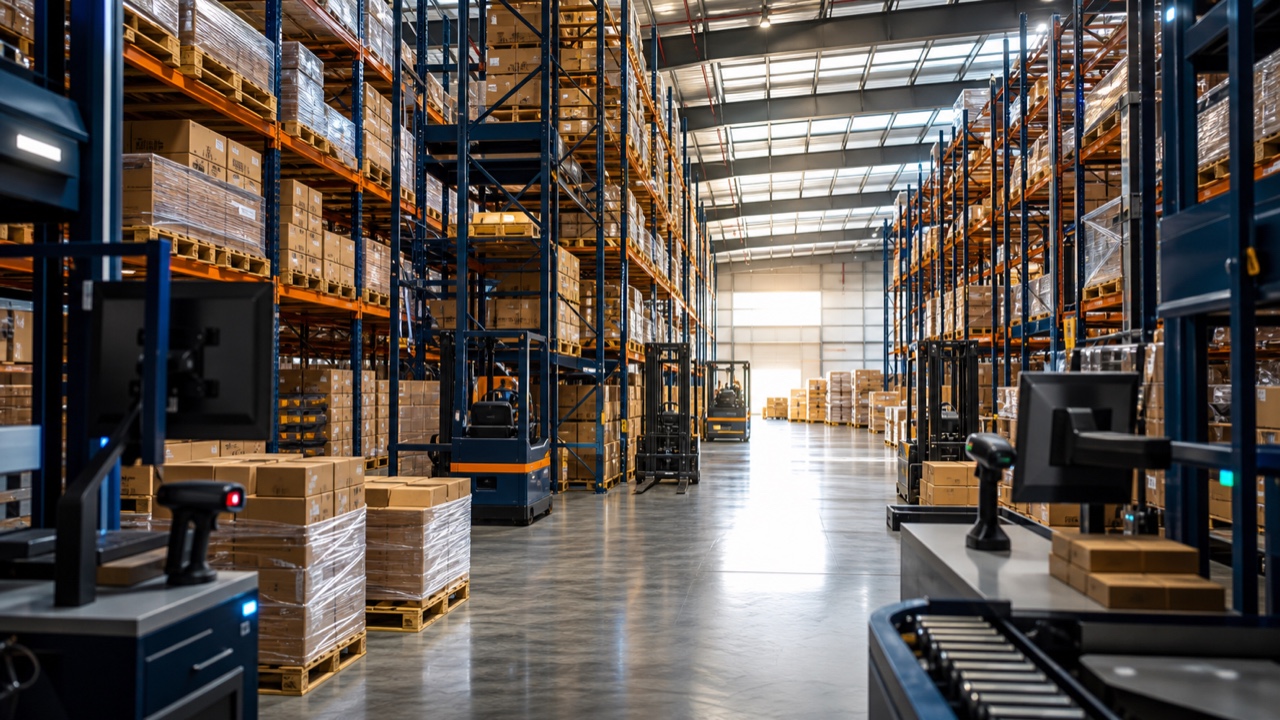
Warehousing and distribution in Australia is not just renting warehouse space. For importers, wholesalers and growing e-commerce operators, it is the operating layer between inbound freight, warehouse receiving, inventory control, order fulfilment, returns and road delivery.
That is useful only when the provider matches the actual workflow. A business importing palletised stock through Sydney has different needs from a brand sending lightweight parcels, a wholesaler shipping to retail distribution centres, or a company holding goods under customs or biosecurity control.
This guide explains what warehousing and distribution can include, when Australian importers should outsource it, how costs are usually structured, and how to choose a provider without confusing storage, freight forwarding, courier dispatch, bonded warehousing and biosecurity-approved handling. For a Sydney-specific warehouse article, read 3PL Sydney. For provider-type differences, read Freight Forwarder vs Courier vs 3PL.
Quick answer: what warehousing and distribution means
Warehousing and distribution means the workflow that receives goods, stores inventory, controls stock, prepares orders, dispatches freight and handles returns or delivery exceptions. A 3PL provider is one common way to outsource that workflow.
ASCM defines third-party logistics as a buyer and supplier team with a third party providing product delivery services. ASCM lists services such as warehousing, inventory management, picking and packing, cross-docking, distribution, transportation, shipping, receiving and returns. That list is useful because it shows why warehousing and distribution should be treated as one operating chain, not two separate purchasing decisions.
For a practical Australian importer, warehousing and distribution can include:
- Receiving inbound freight.
- Pallet, carton or SKU storage.
- Inventory control and reporting.
- Pick and pack.
- Labelling and kitting.
- B2B distribution.
- E-commerce fulfilment.
- Returns management.
- Transport coordination.
- Warehouse-to-customer proof of delivery.
It may also connect to freight forwarding, national road transport, warehouse storage, and contact-based shipment planning. If pallet or linehaul delivery is part of the brief, pair the warehouse decision with the Palletised Freight Australia and Interstate Freight Australia guides.
Warehousing vs distribution vs 3PL
Warehousing is the receiving, storage and stock-control layer. Distribution is the outbound movement layer: picking, packing, dispatch, carrier handoff, proof of delivery and exception follow-up. 3PL is the outsourced provider model that may run both layers.
MYOB’s 3PL guide explains that 3PL providers can use fulfilment centres to manage warehousing, fulfilling orders and shipping. It also distinguishes 3PL warehousing from standard storage because 3PL can include wider in-house logistics services.
The difference matters:
- A storage unit gives space but usually not freight receiving, systems, pick-pack or SLA.
- A leased warehouse gives control but requires rent, staff, equipment, systems and management.
- A 3PL warehouse gives outsourced operations but must be managed by service agreement and process.
- A bonded or biosecurity-approved pathway may be needed before goods become ordinary 3PL stock.
If goods are still under customs control, read Bonded Warehouse Australia. If goods need biosecurity checks, use customs clearance documents and DAFF BICON before planning normal fulfilment.
How 3PL, 4PL, courier and freight forwarder roles fit
This is where many comparison pages become too broad. A 3PL is usually an operating partner for warehousing, fulfilment, inventory and transport execution. A 4PL is more likely to manage a wider supply chain design or orchestration layer across several providers. MYOB’s 3PL guide makes the practical distinction that 3PL companies focus on logistics, while 4PL providers handle an entire supply chain and are often better suited to larger companies.
For most Australian SMEs, wholesalers and importers, the near-term choice is not “3PL or 4PL”. It is more practical:
- Use a freight forwarder when the main job is international freight, supplier coordination, customs handoff and arrival planning.
- Use a courier when the shipment is already parcel-ready and needs a carrier label, pickup and delivery.
- Use a 3PL when stock needs receiving, storage, inventory control, pick-pack, returns and dispatch.
- Use bonded or biosecurity-approved handling when the stock is not yet ordinary cleared inventory.
If the goods are still in the import pipeline, start with customs clearance Australia and shipping from China to Australia before deciding that ordinary 3PL storage is available.
What services can warehousing and distribution include?
The exact scope varies by provider. Ask about:
- Inbound receiving from containers, LCL releases, pallets, cartons or courier shipments.
- Count, check-in and discrepancy reporting.
- Putaway, storage locations and stock rotation.
- SKU, batch, serial, expiry or lot control.
- Pick-pack for e-commerce, wholesale or B2B orders.
- Kitting, bundling, relabelling or light value-added services.
- Returns inspection and restocking.
- Road freight, courier, pallet transport or retail DC delivery.
- WMS visibility, integrations, reporting and cycle counts.
- Account management and exception handling.
DHL’s 3PL logistics guide emphasizes end-to-end visibility, warehousing, order flow and fulfilment support as brands scale. The key is not whether a provider can list services. It is whether those services fit your order profile, distribution promise and inbound freight reality.
Match the warehouse model to the business model
The same warehouse can be excellent for one business and painful for another. Match the provider to the work pattern:
| Business model | 3PL fit to look for | What can go wrong |
|---|---|---|
| Ecommerce brand | SKU-level pick-pack, parcel labels, returns, portal visibility and channel integrations | Low storage rate hides high pick, packaging or returns cost |
| Wholesale importer | Pallet receiving, carton picking, B2B delivery booking and discrepancy reporting | Provider is parcel-oriented and weak at pallets or retail DC delivery |
| Seasonal retailer | Peak labour, overflow storage, stocktake discipline and flexible dispatch capacity | Minimum monthly charges or peak surcharges erase the benefit |
| Regulated importer | Customs/biosecurity handoff, quarantine discipline and approved handling awareness | Ordinary 3PL flow is used before cargo is cleared or permitted |
| Bulky goods seller | Racking, MHE, road freight, damage controls and delivery scheduling | Provider is built for small parcels and cannot handle size or weight |
This is where the TwayS angle is different from generic ecommerce fulfilment articles. An importer often needs the 3PL conversation to start upstream: freight mode, container or LCL release, customs status, BICON result, delivery booking and receiving rules. The warehouse fit is only visible once those inputs are known.
When Australian importers should outsource warehousing and distribution
Consider outsourcing warehousing and distribution when:
- Your team spends too much time receiving, storing, picking or packing stock.
- Order volume is seasonal or difficult to staff.
- You import stock but do not have a warehouse team ready to receive it.
- You need pallet storage plus order fulfilment.
- You sell through multiple channels and need stock visibility.
- Returns, labelling, kitting or B2B dispatch are becoming a bottleneck.
- You need local distribution after sea or air freight.
Keep operations internal when volume is small, simple and manageable, or when product handling requires specialist control that no provider can meet.
Use How to Choose a Freight Forwarder in Australia if the main problem is still international movement, customs or shipment coordination rather than warehousing and fulfilment.
The inbound-to-delivery workflow
A clean warehousing and distribution workflow starts before the goods arrive.
- Supplier or forwarder sends shipment data.
- Customs and biosecurity status is resolved.
- Delivery is booked into the warehouse.
- Goods are received, counted and checked.
- Inventory is entered into the warehouse system.
- Orders are received from sales channels or manual instructions.
- Items are picked, packed and labelled.
- Orders are dispatched by courier, pallet freight or road transport.
- Returns and exceptions are reported.
The dangerous handoff is between inbound freight and warehouse receiving. If the warehouse provider does not know what is arriving, the forwarder does not know receiving constraints, or the importer has not resolved customs and biosecurity, delays and extra costs can follow.
That is why TwayS connects freight forwarding, warehousing and 3PL, road transport, eligible short-term handling through an appropriately licensed Section 77G depot and eligible handling through a suitable DAFF-approved site or arrangement in the same logistics conversation.
Cost components to ask about
Warehousing and distribution costs are usually modular. Ask for:
- Receiving fees.
- Container unpack or pallet receiving.
- Storage by pallet, bin, shelf, cubic metre or location.
- Pick fees.
- Pack fees.
- Carton, satchel, label and packaging material costs.
- Kitting, labelling, bundling or special handling.
- Returns handling.
- Cycle count or stocktake fees.
- System integration or onboarding fees.
- Account management fees.
- Courier, pallet freight or road transport charges.
- Minimum monthly charges.
- Exit or stock relocation fees.
Do not compare only storage rates. A lower storage rate can be offset by receiving, pick-pack, account, packaging, returns or transport charges.
Build a transition plan before moving stock
Moving stock into outsourced warehousing is not only a commercial decision. It is a data and process migration.
Before the first inbound booking, prepare:
- SKU master: SKU codes, descriptions, barcodes, dimensions, weights, carton quantities, expiry or batch rules.
- Inbound profile: container, LCL, pallet, carton, courier and return flows.
- Order profile: order count, order lines, units per order, B2B vs B2C split, peak season and cut-off promises.
- Exception rules: damaged stock, unidentified cartons, short receipts, over receipts, returns and customer claims.
- Reporting rhythm: stock-on-hand reports, cycle counts, aged stock, returns status and transport exceptions.
Run a pilot if possible. Start with one product group, one inbound shipment or one sales channel before moving the whole operation. A slow, visible transition is usually cheaper than a rushed migration that loses inventory accuracy.
If inbound freight is part of the transition, connect the plan to TwayS freight forwarding, warehousing and 3PL, and national road transport before the first container or pallet arrives.
Provider checklist
Before choosing a warehousing and distribution provider, ask:
- What cargo types do you handle well?
- What cargo types do you refuse?
- Can you receive pallets, loose cartons, LCL releases and container unpack?
- What are your receiving cutoffs and booking rules?
- How is stock counted and reported?
- What WMS or portal access is available?
- Which sales channels or systems can integrate?
- How are damaged, short, over or unidentified goods handled?
- What are standard SLA targets?
- How are returns processed?
- Who manages transport exceptions?
- What insurance, liability and stock control terms apply?
- What happens if volume spikes?
- What is the exit process if we move stock out?
For warehouse safety, also check Safe Work Australia’s traffic management guidance for warehousing and the relevant state WHS obligations. A provider’s receiving process is not just convenience; it affects workers, drivers and visitors on site.
Compliance and special freight
Not all stock belongs in a standard 3PL flow.
Dangerous goods may require specific declaration, storage and transport controls. The Australian Dangerous Goods Code is the national reference for road and rail transport of dangerous goods, while NSW EPA provides state-level dangerous goods information.
Biosecurity-risk goods may require BICON checks, permits, treatment, inspection or approved handling. Customs-controlled goods may need a licensed depot, licensed warehouse or other authorised pathway before home consumption. Before ordinary 3PL stock is released, use the Import Duty and GST Australia worksheet to keep landed-cost assumptions separate from warehouse fulfilment cost.
Separate these questions:
- Is the stock cleared for home consumption?
- Is there a biosecurity direction?
- Is it dangerous goods?
- Is temperature control needed?
- Is the warehouse approved or suitable for the activity?
- Can the 3PL actually handle the goods under its insurance and procedures?
Do not assume “3PL” means “can handle everything”.
Red flags
Be careful if a provider:
- Quotes without asking SKU count, order profile or inbound freight details.
- Treats container unpack, LCL receiving and parcel fulfilment as the same process.
- Has unclear receiving windows or no booking discipline.
- Cannot explain stock discrepancy handling.
- Offers no visibility or reporting.
- Does not explain minimum charges.
- Avoids returns process detail.
- Cannot state what freight types it refuses.
- Blurs bonded, biosecurity and normal 3PL storage.
- Does not explain exit terms.
The right provider should ask questions back. If they do not understand the import path, they may not be ready to receive the stock.
When not to outsource yet
Do not outsource warehousing and distribution too early if the operating model is still unclear.
Keep fulfilment internal for a while longer when:
- SKU count is tiny and order volume is easy to manage.
- Product handling is still changing every week.
- Packaging, labels or returns policy are not settled.
- Stock data is unreliable.
- Margins cannot absorb receiving, storage, pick-pack and account fees.
- The product needs specialist handling the available 3PL cannot prove.
3PL and outsourced warehousing work best when the importer enters with clean data, stable rules and enough volume for the provider relationship to make sense. A good provider can remove operational load; it cannot fix a product file, supplier process or sales promise that keeps changing underneath it.
Bottom line
Warehousing and distribution searches often lead to generic storage or ecommerce fulfilment pages. Importers need a broader decision guide that includes inbound freight, customs, biosecurity, storage, pick-pack, returns and road delivery.
The best warehousing and distribution fit is not just the cheapest storage rate. It is the provider whose receiving rules, systems, service scope and freight handoffs match your actual operation.
If you want TwayS to assess whether outsourced warehousing fits your stock flow, send the contact team your SKU count, order volume, inbound freight profile, storage needs, delivery requirements and any customs or biosecurity constraints.