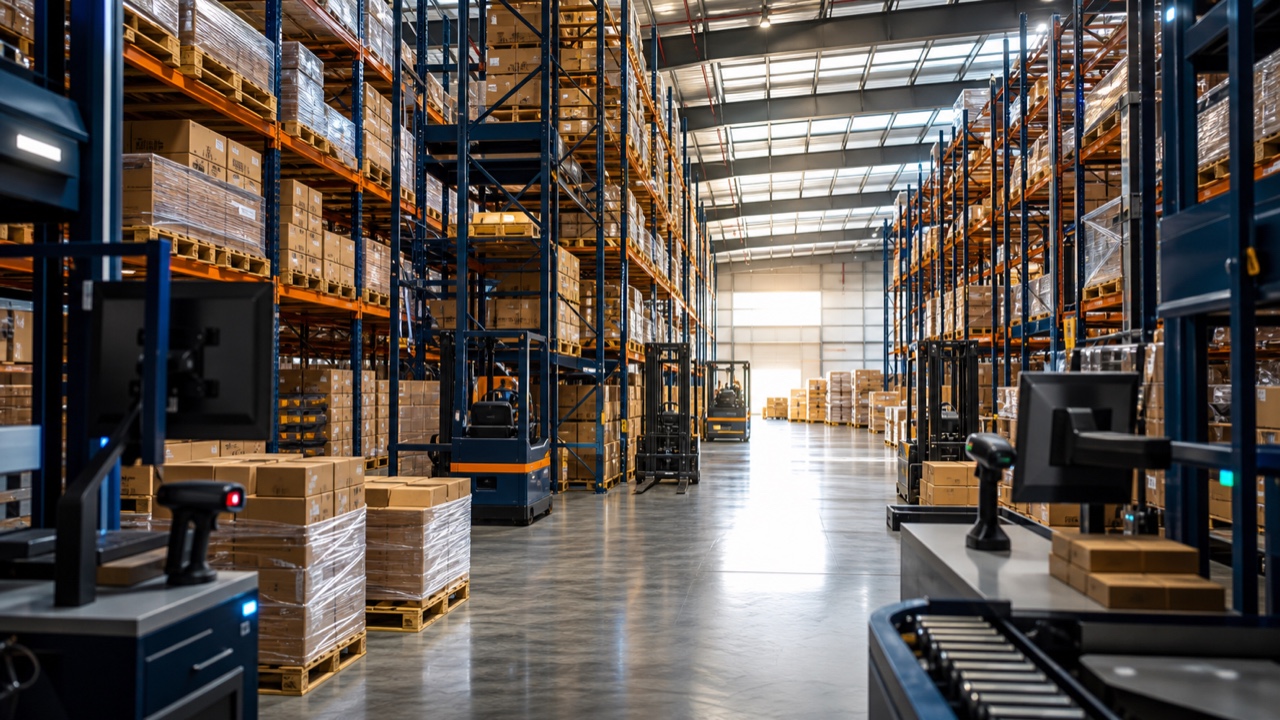
Freight forwarder vs courier vs 3PL is a useful comparison, but the wrong question can lead to the wrong logistics model. Australian importers rarely need only a label. They need to know which party owns international freight, border documents, storage, fulfilment, delivery, exceptions and customer experience.
Most articles on this topic explain definitions: a courier moves parcels, a freight forwarder organises freight, and a 3PL handles outsourced logistics. That structure is useful, and it is backed by industry sources. The Australian Bureau of Statistics freight forwarding classification describes freight forwarders as units contracting transport using one or more modes and taking prime responsibility for the transport operation. The ABS courier classification focuses on door-to-door pickup and delivery of documents, parcels and items under 30 kg. ASCM’s 3PL logistics page lists warehousing, inventory management, picking, packing, distribution, transportation, shipping, receiving and returns.
Definitions alone do not help when a container arrives in Sydney, a BICON condition appears, a warehouse needs a booking, or a courier network refuses an oversized carton. This guide turns the comparison into an Australian importer decision framework.
Quick answer
Use a courier when the shipment is small, packaged, direct and low-complexity. Couriers suit documents, samples, ecommerce parcels, replacement parts and domestic last-mile delivery.
Use a freight forwarder when the shipment is international, palletised, multi-leg, by sea or air, or needs active coordination across suppliers, carriers, customs broker handoff, biosecurity, depot, warehouse and final delivery.
Use a 3PL when the business needs ongoing receiving, storage, inventory control, pick-pack, dispatch, returns or retail/ecommerce fulfilment. Many importers need a blend: forwarder for inbound freight, broker for clearance, 3PL for stock, courier or road freight for final delivery.
What a freight forwarder does
A freight forwarder is a shipment planner and freight coordinator. FIATA’s freight forwarding definition covers carriage, consolidation, storage, handling, packing, distribution and advisory services connected with customs, fiscal matters, insurance, payment and documents.
For Australian importers, the forwarder value is sequencing. A good forwarder helps connect:
- supplier handoff and export documents
- FCL vs LCL shipping
- air freight from China to Australia
- shipping from China to Australia
- shipping from Vietnam to Australia
- carrier release and destination charges
- customs broker handoff
- BICON Australia
- warehouse receiving and palletised freight
Use a forwarder when the risk is not just transport speed but coordination across several parties.
What a courier does
A courier is strongest when the shipment is small, standardised and direct. The ABS courier classification is built around door-to-door pickup and delivery of documents, parcels and other items under 30 kg. Commercial courier networks differ, but the concept is useful: label the parcel, move it through the network, deliver to the receiver.
Courier is often right for:
- samples
- replacement parts
- documents
- ecommerce parcels
- small domestic deliveries
- simple international parcels where the courier accepts the commodity
Courier can be weak when the shipment involves pallets, cartons outside network limits, dangerous goods, batteries, biosecurity risk, formal clearance, storage, staged release, retail DC bookings or unpacking. If the shipment needs customs clearance documents, lithium battery shipping Australia screening or a delivery slot at a warehouse, a courier label may not be enough.
What a 3PL does
A 3PL is an outsourced logistics operator, not just a transport company. ASCM lists common 3PL functions such as warehousing, inventory management, product selection and packing, cross-docking, distribution, transportation, shipping, receiving and returns.
Use a 3PL when goods need an operating home after arrival:
- receiving imported stock
- checking cartons or pallets
- storing inventory
- pick-pack and ecommerce fulfilment
- retail or wholesale dispatch
- returns processing
- labelling, kitting or repacking
- cross-dock or staged delivery
For importers, a 3PL becomes stronger when connected to warehousing and distribution Australia and 3PL Sydney planning before the shipment arrives. A 3PL cannot fix every upstream document problem, but it can prevent receiving delays when stock is expected, labelled and booked properly.
Where the categories overlap
The categories overlap in real life. A forwarder may offer warehousing or distribution. A 3PL may manage transport. A courier may offer international parcel clearance. That is why provider labels can mislead.
Start with scope: which work is actually included?
Ask whether the provider owns:
- international freight booking
- customs broker coordination
- import duty and GST assumptions
- HS code Australia or product evidence collection
- BICON and biosecurity handoff
- delivery order and carrier release
- receiving, unpacking and storage
- final delivery and returns
- exception reporting
If the answer crosses several categories, the importer probably needs a blended model rather than one provider label.
Australian import compliance matters
Provider choice changes when the shipment crosses the Australian border. ABF’s import declaration guidance explains that goods over AUD1,000 being cleared into home consumption generally require an Import Declaration. ABF’s GST guidance explains how GST on taxable importations is calculated.
DAFF’s BICON system should be checked when goods, packaging, origin or contamination risk may trigger biosecurity conditions. DAFF’s documentary requirements also matter where documents are used for biosecurity or imported food risk assessment.
That means a small parcel can still become complex if the product is regulated. A pallet can still move smoothly if documents are clean. A container can still be delayed if packing declaration Australia or certificate of origin Australia evidence is weak.
Decision framework
Choose a courier if:
- the shipment is parcel-sized
- it is accepted by the courier network
- customs and biosecurity complexity is low
- no storage or staged release is required
- speed and tracking matter more than custom routing
Choose a freight forwarder if:
- the shipment is international, palletised, LCL, FCL, air or multi-leg
- supplier documents need review
- a customs broker, carrier, terminal, depot or warehouse must be coordinated
- the shipment has demurrage and detention Australia risk
- routing, timing, cargo type or delivery constraints need judgement
Choose a 3PL if:
- stock needs receiving and storage
- orders need pick-pack and dispatch
- returns need handling
- inventory visibility matters
- the business is scaling beyond ad hoc deliveries
Use a blended model if the importer needs inbound freight, border clearance, storage and customer delivery in one operating flow.
Common mistakes
The first mistake is using courier for freight that needs a forwarder. Pallets, oversized cartons, dangerous goods, battery products, fragile cargo, formal clearance and warehouse delivery bookings often need more than a parcel network.
The second mistake is assuming a forwarder automatically includes customs brokerage, insurance, quarantine advice or 3PL fulfilment. Some providers offer those services, some coordinate them, and some do not include them at all.
The third mistake is bringing the 3PL in too late. If the 3PL does not know the ETA, carton count, SKU list, pallet configuration, receiving date or biosecurity status, stock can still be delayed after release.
The fourth mistake is choosing by rate only. A low freight line can be erased by common import delays Australia, storage, redelivery, failed delivery, claims, customer dissatisfaction or manual admin.
How TwayS can help
TwayS is most useful where the logistics model needs coordination rather than a single label. The same importer may need freight forwarding services, customs broker handoff, eligible DAFF-approved biosecurity coordination through a suitable site or arrangement, warehousing and 3PL, and national road transport.
To map the right model, send the TwayS contact team the product, origin, package count, dimensions, value, urgency, storage needs, delivery address, receiver constraints and whether the goods need ongoing fulfilment.