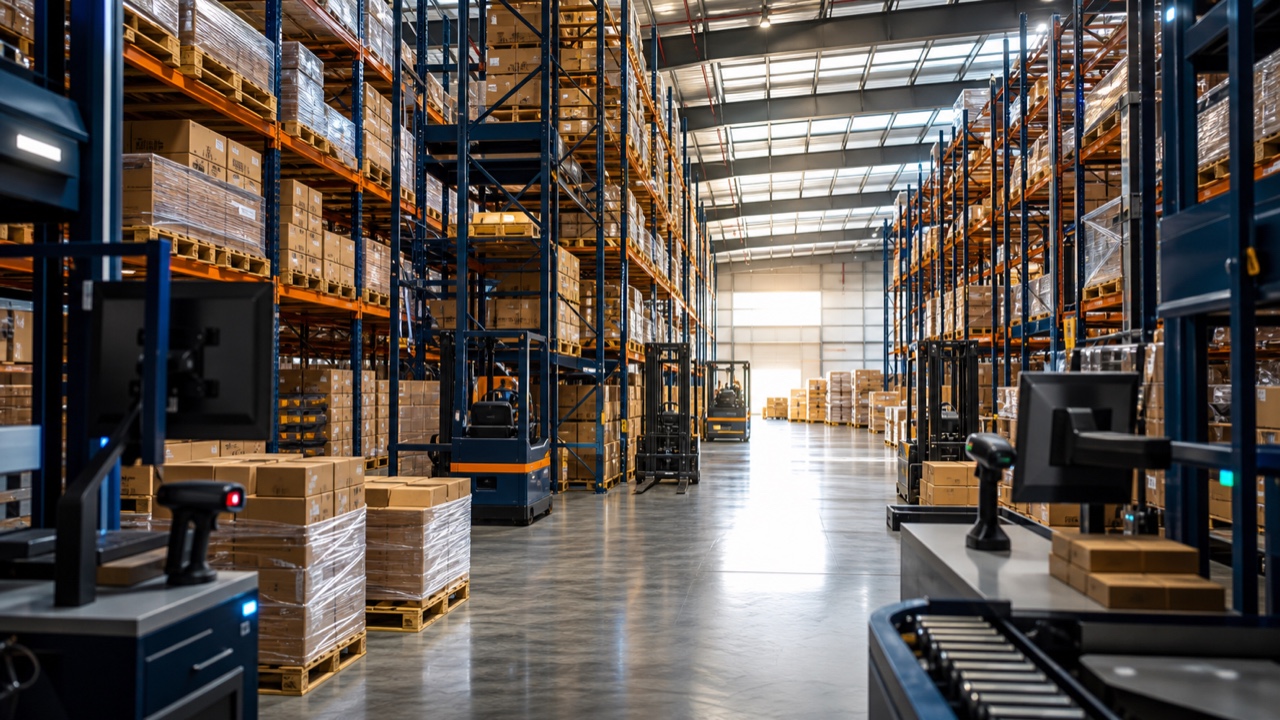
Palletised freight in Australia is freight packed and handled as one or more pallet units. Dimensions, height, gross weight, wrap, labels, stackability, pickup access, receiver access, unloading method and proof of delivery all affect the booking.
A palletised freight quote should not start and end with “one pallet from Sydney to Melbourne”. It should show what has to be true for pickup, linehaul and delivery to happen safely, on time and without redelivery cost.
This guide is written for Australian importers, wholesalers, retailers and e-commerce operators planning palletised freight after sea freight, air freight, warehouse receiving or 3PL dispatch. If the road leg starts from an import arrival, pair it with TwayS guides to freight forwarder Sydney, import duty and GST landed cost, and common import delays in Australia.
Quick answer: what palletised freight means
Palletised freight means cargo is consolidated onto a pallet so it can be moved by forklift, pallet jack, tail-lift or dock equipment. The carrier is moving a pallet unit with a footprint, height, weight, stability profile and unloading requirement.
A useful palletised freight booking should state:
- pallet count, pallet type and whether the pallets are export, CHEP, Loscam or one-way;
- length, width, height, gross weight and whether the pallet can be stacked;
- whether the freight is wrapped, strapped, labelled and safe for handling;
- pickup and receiver access, including forklift, dock, tail-lift, pallet jack or appointment needs;
- whether the freight is fragile, dangerous goods, temperature-sensitive, high-value or subject to quarantine or warehouse controls.
Australia Post’s parcel and freight preparation guide is a useful reminder that freight needs appropriate packing and labelling before it enters a network. For heavy-vehicle tasks, NHVR’s loading requirements and the Load Restraint Guide are more directly relevant to safe loading and restraint.
For TwayS customers, palletised freight often connects freight forwarding, warehouse receiving, national road transport, and 3PL Sydney. The pallet is the operating unit, but the real job is the handoff between customs release, warehouse booking, carrier pickup and receiver readiness.
Why palletised freight still belongs in a road freight plan
BITRE’s 2025 freight chapter says Australia’s domestic freight task reached an estimated 786 billion tonne kilometres in 2024-25, with road and rail now dominating domestic freight activity. BITRE also estimates that road accounted for about 253 billion tonne kilometres of domestic freight in 2024-25, and NSW road freight reached a record 87.6 billion tonne kilometres.
Those figures show how palletised freight connects ports, airports, depots, warehouses, shops, job sites, homes, regional towns and interstate linehaul lanes. The National Freight and Supply Chain Strategy also frames freight as a national productivity, resilience, decarbonisation and data problem, not only a carrier booking problem.
For TwayS customers, palletised freight often connects:
- Port Botany and Sydney freight forwarding to Prestons or south-west Sydney receiving.
- LCL shipping or FCL container movement to warehouse unpack.
- 3PL warehouse operations to customer dispatch.
- Bonded warehouse or Section 77G pathways to cleared delivery.
- National road transport between metro, regional and interstate points.
Road freight service types
The phrase “road freight” can mean several different operating models.
Pallet freight is common for cartons, retail stock, machinery parts, B2B replenishment and warehouse transfers. The key variables are pallet dimensions, gross weight, height, stackability, wrap, labels, pallet exchange and whether the receiver can unload.
LTL, or less-than-truckload, usually means your freight shares linehaul space with other consignments. It can work well for smaller palletised loads, but it relies on accurate dimensions, depot handling and delivery readiness.
FTL, or full truckload, is used when one customer fills or controls the truck space. It can reduce handling, simplify timing and suit larger, high-value, urgent or sensitive loads.
Metro delivery is local freight inside a city or nearby region. It often depends on access, booking windows, driver waiting time, docks, tail-lift needs and receiver readiness.
Interstate linehaul connects major cities and regions. The quote should make clear whether the freight is direct, consolidated, hubbed, intermodal, time-sensitive or economy.
Container transport connects port or depot movement to unpack, storage or final receiver. It adds container availability, wharf slots, detention, demurrage, unpack and empty return considerations.
Dangerous goods, temperature-sensitive, oversized, fragile or high-value freight needs additional handling controls. Do not treat it as general pallet freight until requirements are confirmed.
What palletised freight providers need from you
A useful palletised freight quote starts with data. Send:
- Cargo description and whether the freight is fragile, hazardous, food-related, high-value or temperature sensitive.
- Pallet count, carton count, dimensions, height, gross weight and stackability.
- Pallet type, including CHEP, Loscam, export pallet or one-way pallet.
- Pickup and delivery addresses, including suburb, postcode, business name and contact.
- Pickup and delivery windows.
- Forklift, loading dock, tail-lift or manual handling needs.
- Site access restrictions such as slope, narrow driveway, height clearance, stairs, residential receiver, shopping centre dock or booked delivery slot.
- Delivery reference, purchase order, booking number or receiver paperwork.
- Proof of delivery requirements.
- Insurance or special risk instructions.
If palletised freight is part of an import flow, also share the customs clearance documents, arrival notice, depot availability, release status and warehouse booking time.
Pallet acceptance gate before pickup
A palletised freight workflow needs a hold point before the truck is sent, so the driver, depot, warehouse, receiver and claims file would all recognise the same freight.
Use a simple gate before pickup:
- Go: pallet count, dimensions, gross weight, pallet type and stackability match the quote; freight is wrapped or strapped; labels are visible on at least two sides; photos are taken before dispatch; delivery reference and POD requirements match the receiver booking.
- Rework: cartons overhang the pallet, the wrap is loose, a label is missing, the pallet is leaning, the gross weight has changed, mixed SKUs are not marked, or the pallet cannot be moved safely with the expected forklift, dock, tail-lift or pallet jack.
- Hold: dangerous goods, temperature-sensitive stock, high-value goods, quarantine-sensitive packaging, fragile machinery or retailer delivery rules have not been declared before booking.
- Escalate: the freight depends on port or depot release, a warehouse receiving slot, a retail booking window, interstate linehaul timing or a same-day cross-dock handoff that has not been confirmed.
This gate is especially useful when palletised freight follows container unpack and dimensions planning, moves through interstate freight, or needs cross docking instead of storage. For Sydney importers, NSW Ports network connections are a reminder that port, road, rail, depot and warehousing decisions are connected; a pallet booking should not ignore the upstream release or downstream receiving constraint.
TwayS can use the same acceptance gate across warehousing and 3PL and national road transport. The aim is to catch freight before it becomes a missed pickup, depot exception, redelivery charge or claim dispute.
Pickup and delivery readiness
Many freight problems happen because the truck arrives at a site that cannot load or unload the freight. A quote may assume commercial dock access, but the receiver may actually need a tail-lift, pallet jack, smaller vehicle, specific booking time or additional labour.
Before booking, confirm:
- Is there a forklift at pickup and delivery?
- Is the freight at ground level?
- Is the pallet safe for a pallet jack?
- Is there room for the truck to stop, turn and unload?
- Is a tail-lift required?
- Does the receiver accept deliveries without appointment?
- Who signs for the goods?
- Can the driver wait, and what happens if the site is not ready?
Australia Post’s parcel and freight preparation guide is a useful reminder that freight should be suitably packed, labelled and prepared for transport. For heavy vehicle freight, the NHVR load restraint material is more directly relevant to safe loading and restraint.
Chain of Responsibility is not only the driver’s problem
NHVR explains that Chain of Responsibility is the part of the Heavy Vehicle National Law that makes parties other than drivers responsible for heavy vehicle safety. Parties can include businesses that send, receive, pack, load, schedule or influence the transport task.
For importers and warehouse operators, that means palletised freight planning should consider:
- Accurate weights and dimensions.
- Safe packaging and pallet condition.
- Realistic pickup and delivery windows.
- Receiver readiness so drivers are not pressured into unsafe unloading.
- Loading and unloading practices.
- Load restraint and stability.
- Dangerous goods or special handling declarations.
NHVR’s loading and load restraint regulatory advice says packing, loading, unloading and load restraint practices can affect safety and risk of damage. The Load Restraint Guide is the practical reference for restraint expectations.
This does not mean every importer becomes a transport lawyer. It means poor shipment information and unrealistic site instructions can create operational and compliance risk.
Road freight cost drivers
Road freight pricing depends on more than distance. Common drivers include:
- Weight and cubic dimensions.
- Pallet footprint and height.
- Stackability.
- Lane, service speed and whether linehaul is direct or consolidated.
- Metro, regional, remote or residential delivery.
- Tail-lift, forklift, crane or two-person handling.
- Waiting time, booking windows and restricted access.
- Dangerous goods, temperature control, fragile or high-value handling.
- Fuel, surcharges and seasonal capacity.
- Redelivery, storage or futile delivery events.
If the quote only shows a single number, ask what it assumes. A cheap quote can become expensive if the receiver cannot unload, the dimensions were wrong, or the delivery needs to be rebooked.
Road, rail, air or sea?
Road freight is flexible, but it is not always the only answer.
Road often works well for metro delivery, interstate pallets, container drayage, warehouse transfers, retail replenishment and time-sensitive domestic movement.
Rail or intermodal can suit some longer-distance, higher-volume or lower-urgency movements, especially where terminals and schedules fit. The National Key Freight Routes and National Freight Data Hub can help frame how ports, airports, intermodal terminals and major corridors connect.
Air freight suits urgent, high-value or time-sensitive goods where speed justifies cost.
Sea freight suits international container movement, especially when volume and cost matter more than speed. If the cargo is still overseas, compare FCL vs LCL shipping before deciding the road leg.
The right mode is the one that fits cost, timing, handling risk and delivery readiness together.
Dangerous goods and special cargo
If the freight is dangerous goods, lithium batteries, chemicals, aerosols, flammable goods, medical material or otherwise regulated, flag it before quoting. The Department of Infrastructure publishes the Australian Dangerous Goods Code, which is the core national reference for dangerous goods transport by road and rail.
Do not hide DG status to get a cheaper rate. It can create safety, legal, insurance and delivery issues.
Special cargo can also include:
- Oversized pallets.
- Machinery.
- Fragile goods.
- High-value electronics.
- Food or temperature-sensitive stock.
- Goods requiring quarantine or biosecurity direction.
- Items needing installation site delivery.
For imports, check BICON and biosecurity before the freight reaches the Australian road leg.
How TwayS connects palletised freight to the wider import path
Palletised freight is strongest when it is planned with the upstream and downstream steps. TwayS can connect road transport with freight forwarding, eligible Section 77G depot coordination through an appropriately licensed facility, eligible DAFF-approved biosecurity coordination through a suitable site or arrangement, 3PL warehousing and national road transport.
That matters when a shipment needs:
- Container delivery from Port Botany.
- Pallet delivery after LCL deconsolidation.
- Warehouse receiving in Prestons or Sydney.
- Interstate linehaul after 3PL dispatch.
- Delivery booking with a retailer or receiver.
- Proof of delivery and exception follow-up.
The road freight plan should protect the handoffs between customs release, depot availability, warehouse receiving and customer delivery.
Bottom line
Palletised freight searches often lead to generic carrier pages. Importers need something more practical: a readiness checklist that connects cargo data, compliance, access, delivery and proof.
Before booking, confirm what is being moved, how it is packed, who can load and unload it, what safety requirements apply, and what proof is needed at delivery. Then the palletised freight quote becomes a plan, not a guess.
If you want TwayS to review a palletised freight movement, send the contact team the pallet dimensions, weight, pickup and delivery addresses, access notes, timing and any customs, warehouse or 3PL context.