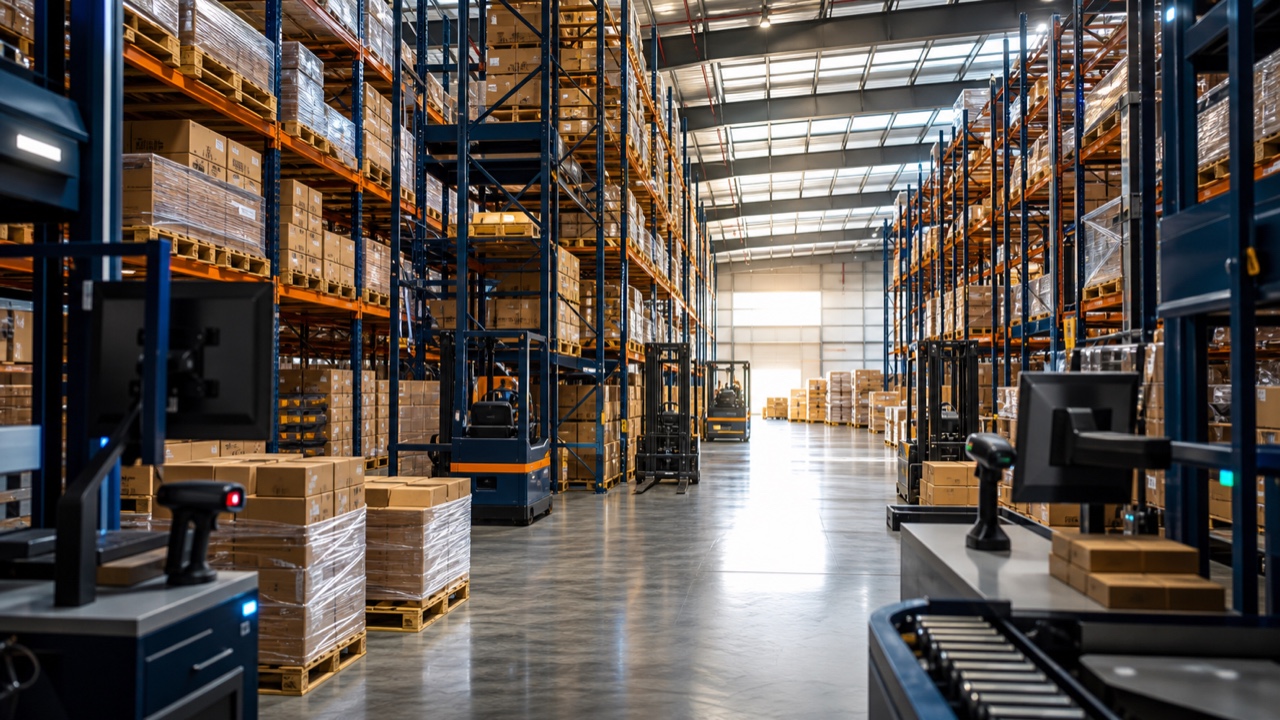
Interstate freight in Australia looks simple when the quote only asks for an origin, destination and weight. In practice, the road leg can fail because the pallet data is wrong, the receiver cannot unload, the delivery booking is missing, the cargo should have been declared as special freight, or the shipment was planned as a courier job when it needed a freight workflow.
This guide is written for importers, wholesalers, retailers and 3PL users who need to move freight between Australian states after customs release, container unpack, LCL availability, warehouse receiving or customer dispatch. If the shipment starts from an international arrival, connect this plan to freight forwarder Sydney, customs clearance documents and common import delays in Australia before booking the interstate leg.
Quick answer: what interstate freight means
Interstate freight means cargo moving between Australian states or territories. It can be parcel freight, palletised freight, less-than-truckload, full truckload, road linehaul, intermodal, air freight or a warehouse-to-customer delivery chain.
Small-parcel tools often make interstate movement look like a postcode and price problem. Commercial freight needs more detail. A quote file should include:
- origin, destination, site contact, delivery reference and requested delivery window;
- pallet or carton count, final dimensions, gross weight, stackability and package condition;
- whether pickup and delivery need forklift, dock, tail-lift, pallet jack, appointment, smaller vehicle or restricted-access planning;
- whether the cargo is dangerous goods, fragile, temperature-sensitive, high-value, food-related, battery-related or subject to biosecurity or warehouse controls;
- proof-of-delivery, photo evidence, redelivery, claims and exception-owner rules.
If the freight is going into or out of 3PL Sydney, the interstate plan also needs receiving capacity, dispatch cutoffs, pallet labels, purchase order references and inventory handoff rules.
Why interstate freight needs a working file
Interstate freight is easy to under-brief because the lane feels familiar. Sydney to Melbourne, Melbourne to Brisbane and Sydney to Perth sound like standard movements until the receiver needs a booking, the pallet is over-height, the cargo is DG, or the delivery is tied to a warehouse cutoff.
BITRE’s 2025 freight chapter estimates Australia’s domestic freight task at 786 billion tonne kilometres in 2024-25, with road and rail dominating domestic freight activity. Freight Australia frames freight as a national productivity, resilience, safety, data and decarbonisation issue. For an importer or 3PL user, that national system becomes one practical question: is this freight ready to be picked up, handled, delivered and received without creating the next exception?
For TwayS customers, interstate freight often starts at one of these handoffs:
- container transport Sydney after a Port Botany box is unpacked;
- LCL shipping after cargo becomes available at a CFS or depot;
- warehouse receiving and dispatch from warehousing and 3PL;
- pallet delivery through national road transport;
- imported stock from shipping from China to Australia that needs distribution beyond NSW.
Interstate freight is not always courier delivery
Courier delivery can work for cartons, satchels and small shipments. Interstate freight is broader. It may include pallets, bulky cartons, crates, machinery parts, retail replenishment, fragile goods, DG, time-sensitive stock, container-related cargo, warehouse transfers and dedicated truck movements.
That difference affects the quote. A parcel-courier quote can often be generated with package dimensions and postcode. A freight quote may need a transport operator to understand pallet stability, handling equipment, receiver access, delivery booking, linehaul network, transfer points and safety obligations.
Use this simple split:
- Courier or parcel: small packages, standard handling, low access complexity.
- Pallet freight: cartons or goods consolidated onto pallets, often moved through depot and linehaul networks.
- LTL freight: less-than-truckload freight sharing truck capacity with other consignments.
- FTL or dedicated freight: one shipment controls the truck or most of the truck, often for volume, speed, sensitivity or handling control.
- Intermodal freight: road plus rail or another mode when the lane, timing and terminal handoffs fit.
- Air freight: used when time or value justifies higher cost; see the TwayS guide to air freight from China to Australia for chargeable-weight logic.
Choose the network that matches the cargo and the receiver, not only the cheapest lane rate.
What an interstate freight quote should include
A useful quote request starts with the cargo as it will actually travel, not the supplier’s early estimate.
Send final packed data:
- item description and commodity type;
- pallet count, carton count or crate count;
- length, width, height and gross weight for each handling unit;
- whether the freight can be stacked;
- packaging condition, wrap, labels, strapping and photos if the freight is fragile or irregular;
- value, insurance needs and claim evidence requirements.
If you are close to a freight threshold, use the CBM calculator and 20ft container dimensions guides to sense-check volume. Interstate freight pricing is not only distance. Cubic size, density, minimum charges, handling time, linehaul method and delivery access can all change the result.
Then send the lane file:
- pickup address, contact, opening hours and loading equipment;
- delivery address, receiver contact, booking window and delivery reference;
- whether pickup or delivery is metro, regional, remote, residential, retail-dock, shopping-centre, construction site or restricted access;
- whether tail-lift, forklift, pallet jack, smaller vehicle, appointment or manual handling is required;
- requested service speed and whether the deadline is fixed or flexible.
For imported freight, add the Australian handoff status: import duty and GST, release status, depot availability, warehouse booking, container unpack timing and any customs, biosecurity or quarantine direction.
Route planning: lane first, then service
Interstate freight pages often list popular lanes such as Sydney to Melbourne, Melbourne to Brisbane or Sydney to Perth. Lane pages can be useful, but they can also become thin if each page says the same thing with a different city name.
Keep the public planning focused on the lane file. The exact quote can then be built from the cargo, access and timing details.
Start with:
- Origin and destination type: depot, warehouse, commercial site, home, port, airport, rural property or retail distribution centre.
- Lane pattern: metro-to-metro, metro-to-regional, regional-to-metro, interstate linehaul or remote delivery.
- Service speed: economy, express, time-critical, dedicated or staged delivery.
- Handling profile: cartons, pallets, crates, long items, fragile stock, machinery, batteries, DG or temperature-sensitive goods.
- Handoff point: direct delivery, depot pickup, 3PL receiving, retailer booking, site delivery or customer delivery.
This is also where multimodal transport can matter. Road freight is flexible, but not every interstate move needs to be pure road. Some lanes can use rail or combined routing when timing, cost and terminal handoffs fit. Other shipments justify dedicated road or air because the handling risk or deadline is tighter.
Receiver readiness controls cost
The most expensive part of interstate freight is sometimes not the kilometres. It is the failed delivery.
A failed delivery can happen when:
- the receiver is closed;
- the delivery needs a booking but no slot exists;
- the truck cannot access the site;
- there is no forklift, dock or unloading equipment;
- the pallet is too tall, unstable or heavy for the assumed equipment;
- the receiver refuses freight because the PO, label or reference is wrong;
- the driver cannot wait long enough for the site to become ready.
This is why interstate freight should connect with warehousing and distribution and warehouse planning, not only transport pricing. A warehouse-to-warehouse transfer is easier when both sites know the pallet count, labels, dock plan and receiving window. A retail or job-site delivery needs clearer contact and exception rules.
For container-linked moves, connect the plan back to container transport Sydney and FCL vs LCL shipping. If the full container is being unpacked into interstate pallets, the interstate freight clock starts only after cargo is available, labelled and ready to move.
Proof of delivery and exception rules
Booking and tracking are not enough for business freight. The proof-of-delivery file and exception rules should be agreed before pickup, because they decide what happens when a receiver says freight is missing, damaged, late, short, refused or delivered to the wrong dock.
For each interstate consignment, define what proof is needed:
- receiver name, signature, time stamp and delivery location;
- photo evidence where freight is high-value, fragile, irregular or site-delivered;
- carton, pallet or item count checked against the dispatch record;
- damage notes before the driver leaves the site;
- purchase order, delivery docket, booking reference or ASN match;
- who decides whether redelivery, return, claim, depot hold or urgent replacement is needed.
This matters most when freight moves through a warehousing and distribution workflow. If the receiving warehouse cannot match the freight to the purchase order, the interstate carrier may have completed the transport job while the inventory job is still broken. If the delivery is linked to an import file, keep the POD beside the commercial invoice, packing list, warehouse receipt and customer dispatch record.
For a wholesaler, importer, retailer or 3PL user, the useful workflow is quote file, dispatch file, receiver booking, POD, exception owner and close-out evidence.
Chain of Responsibility and load restraint
Interstate freight is a safety workflow as well as a delivery workflow. NHVR’s Chain of Responsibility explains that parties beyond the driver can influence heavy vehicle safety. That can include people who send, receive, pack, load, schedule or manage the freight task.
For an importer or warehouse operator, this means the freight file should not hide inconvenient details. The NHVR loading requirements and Load Restraint Guide are relevant when freight is heavy, unstable, long, high, unusual or sensitive to movement.
Before dispatch, confirm:
- declared gross weight is accurate;
- pallets are stable, wrapped and labelled;
- freight can be safely handled by the expected equipment;
- load restraint assumptions are realistic;
- pickup and delivery windows do not pressure unsafe loading or unloading;
- dangerous goods, battery, food, chemical or temperature-sensitive status is declared.
If the cargo is dangerous goods, check the Australian Dangerous Goods Code and do not treat the freight as normal general cargo. For batteries or regulated cargo, pair the road plan with lithium battery shipping Australia and BICON or customs checks before release.
How TwayS connects interstate freight to the import path
TwayS is strongest when the interstate leg is not planned in isolation. A shipment may move from overseas supplier to Australian port, customs broker, quarantine direction, an appropriately licensed Section 77G depot or suitable DAFF-approved site or arrangement, warehouse receiving, palletisation and interstate delivery.
That path can involve:
- freight forwarding to move cargo into Australia;
- eligible Section 77G depot coordination through an appropriately licensed facility or another approved handling pathway when release is not straightforward;
- warehouse receiving after container, LCL or air freight availability;
- national road transport for metro, regional and interstate freight;
- transportation of cargo when the shipment needs a practical operating plan rather than a parcel label.
The question is not only “how do I send this interstate?” It is “what has to be true before this commercial freight can move safely, arrive cleanly, and be received without a failed-delivery event?”
Bottom line
Interstate freight should be planned as an operating workflow: quote file, pallet data, linehaul choice, receiver readiness, CoR, POD and the handoff from import release to warehouse or final delivery.
Before asking for a price, prepare the shipment as a working file. Confirm cargo facts, lane, service speed, access, safety requirements, warehouse or 3PL context and proof needs. Then the quote becomes a plan rather than a postcode guess.
To plan an interstate movement, send the TwayS contact team the origin, destination, cargo description, final dimensions, weight, pallet or carton count, receiver access notes, timing, customs or warehouse context and any special handling requirements.